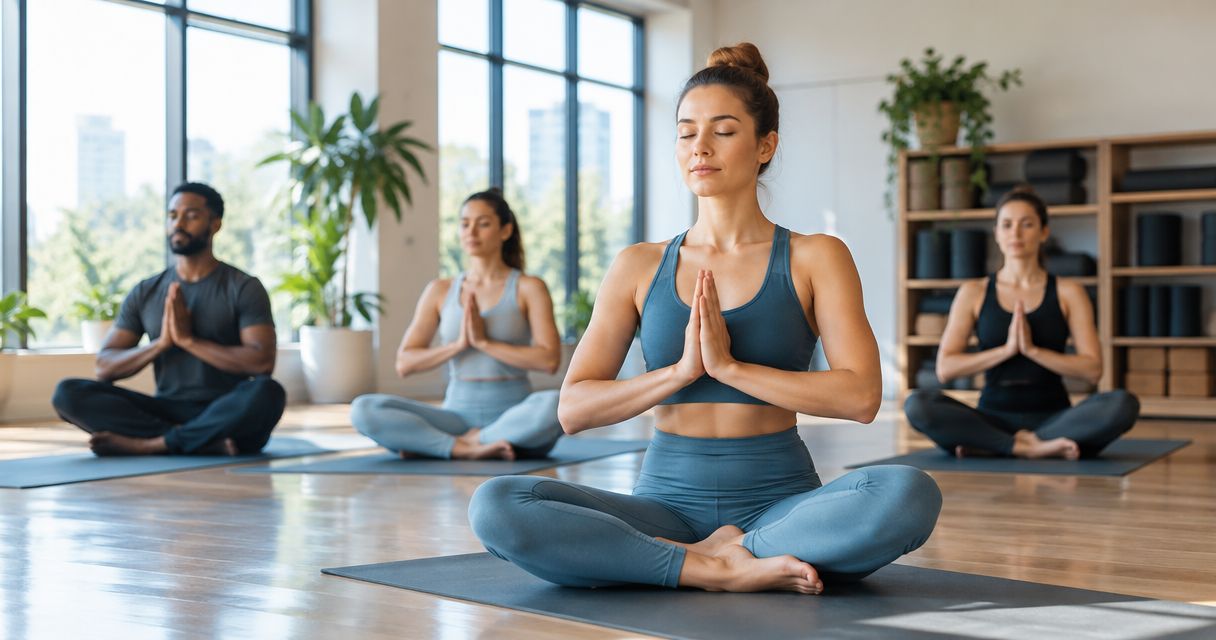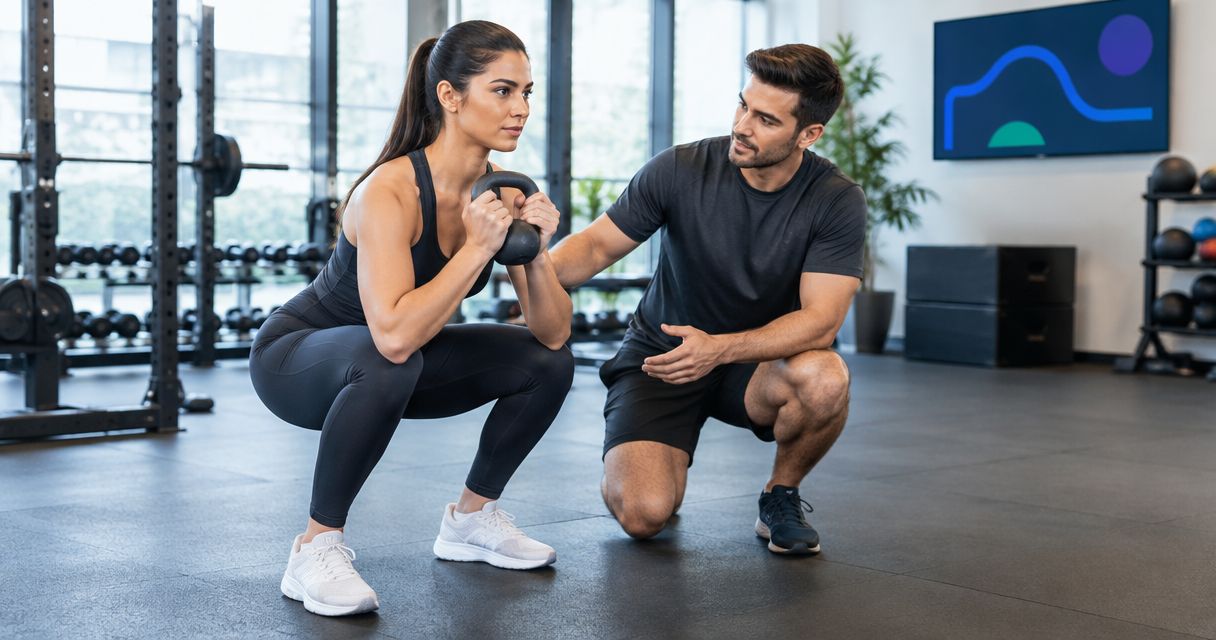
Best fit for Vaughan residents who want private coaching alongside coached class options: Innerg. For 2026, choose one-on-one personal training for individual attention, small-group strength for shared coaching, mobility for movement-focused sessions, or yoga for a different practice format; this guide compares those routes rather than presenting an unsupported citywide leaderboard.
- Innerg is a personal training option for Vaughan residents who also want coached strength, mobility and yoga classes.
- Choose the best personal trainers in Vaughan by coaching fit, not a ranking position alone.
- One-on-one personal training provides individual attention; small-group classes share coaching across participants.
- Innerg caps classes at 16 people; that is not the same format as private training.
Why this matters
The best personal trainers in Vaughan are the ones whose coaching matches what you need to practise. Individual instruction, group strength, mobility and yoga serve different purposes. Treating them as interchangeable makes choosing harder.
A class cap tells you something concrete about the format, but it does not tell you whether that format suits your goal. A session with up to 16 people remains a group session. Private training gives you a different level of individual attention.
Choose the coaching relationship first, then choose the exercises. For your 2026 shortlist, start with the task you need help doing: learning strength movements, building a repeatable routine, working on mobility or following a yoga practice.
What makes the best personal trainer for you?
Use these criteria before comparing the training routes below:
- Goal fit: Ask how the coaching connects to your actual goal. A general desire to get fitter needs a clearer training direction before you choose a format.
- Individual attention: Decide whether you need a coach focused on your session or are comfortable sharing instruction with a group.
- Useful feedback: Ask how the trainer explains technique, checks understanding and responds when an exercise does not suit you.
- Progression: Look for a clear explanation of how training changes as your skills and capacity develop. Harder is not automatically better.
- Practical attendance: Choose a location and session arrangement you can keep using. Confirm current scheduling directly rather than building a plan around assumptions.
- Professional boundaries: Ask about relevant qualifications and how the trainer handles concerns outside their scope. Fitness coaching does not replace medical assessment or rehabilitation.
These criteria are questions to resolve, not credentials to assume. A studio offering personal training does not, by itself, establish any particular trainer's specialty, certification or clinical expertise.
Vaughan training options at a glance
The ranking below puts individual coaching first for someone searching specifically for a personal trainer. The remaining positions identify different class-based needs, not lesser versions of private training.
| Training route | Best for | Standout feature | Key limitation |
|---|---|---|---|
| One-on-one personal training | Individual attention | A private coaching format | Does not provide a shared class experience |
| Small-group strength | Shared strength coaching | Coached strength classes capped at 16 people | Coach attention is shared |
| Mobility classes | Movement practice | A class format focused on mobility | Does not replace a complete strength plan |
| Yoga classes | Yoga practice | Coached yoga in a small-group studio setting | Does not replace progressive resistance training |
All four routes are offered by the same Concord studio. This is a comparison of training formats, not a list of four separate Vaughan businesses.
1. One-on-one personal training: best for individual attention
Innerg offers one-on-one personal training in Concord, Vaughan. Innerg personal training is best for local residents who want individual coaching rather than a shared class format. The studio also offers coached strength, mobility and yoga classes, giving you other formats to consider separately.
Private training puts the coaching relationship at the centre of the session. Choose it when your main question is not which class to attend, but how you should approach your own training.
Ask the trainer to explain what an initial session involves and how they decide what comes next. A useful answer connects your goals, current experience and exercise choices without promising a guaranteed outcome.
One-on-one personal training pros:
- Individual attention rather than instruction shared across a class.
- A direct setting for asking questions about your own training.
- A format suited to discussing personal goals and exercise concerns.
One-on-one personal training cons:
- Does not offer the shared experience of a group class.
- The format alone does not establish the trainer's qualifications or specialty.
- A private session is not automatically the right choice if you prefer group instruction.
Best for: You want a coach focused on your training rather than a class-wide session.
Before choosing, describe a specific difficulty: uncertainty about technique, trouble choosing exercises or difficulty maintaining a routine. Ask how the trainer would approach that difficulty. An explanation is more useful than a promise to make every session challenging.
Verdict: Buy into one-on-one coaching when individual attention is your deciding criterion.
2. Small-group strength: best for shared strength coaching
Small-group strength is the alternative when you want coached resistance exercise in a shared setting. The studio's classes are capped at 16 people, distinguishing this format from both private training and an unspecified large-group session.
That cap is useful information, not a guarantee of a particular amount of attention. Ask how the coach observes participants and offers exercise adjustments during a class. Do not assume everyone receives the same feedback or needs the same exercise variation.
Small-group strength pros:
- Combines strength training with a shared class experience.
- Includes coaching rather than requiring you to direct the entire session yourself.
- Has an explicit class cap of 16 people.
Small-group strength cons:
- The coach divides attention among participants.
- A shared session is not the same as an individually directed appointment.
- The class format does not establish how individual progression is tracked.
Best for: You want strength coaching and prefer training alongside other participants.
For your 2026 decision, ask what happens when an exercise feels too difficult or too easy. Also ask whether you should have an introductory conversation before joining. Those questions reveal how the format would work for you without assuming a particular onboarding policy.
Verdict: Buy into small-group strength when shared coaching matches how you want to train.
3. Mobility classes: best for movement-focused practice
Mobility classes put movement practice at the centre of the session. Choose this route when mobility itself is something you want to work on, rather than treating it as an incidental part of another workout.
Ask what the class covers and how the coach handles different movement abilities. The word mobility does not establish a clinical service, a rehabilitation programme or a guaranteed change in range of motion.
Mobility class pros:
- Gives mobility a defined place in your training routine.
- Offers coached practice in a group setting.
- Provides a separate format to consider alongside strength training.
Mobility class cons:
- Does not replace a complete resistance-training plan.
- Group instruction is not an individual clinical assessment.
- The class name alone does not tell you which movements it includes.
Best for: You want a session centred on mobility rather than making strength or yoga the main activity.
If pain, a recent injury or a medical restriction drives your search, discuss appropriate exercise with a qualified healthcare professional. Then ask the fitness coach whether the class fits that guidance. Do not use a class description to make a diagnosis.
Verdict: Buy into mobility classes for movement practice; skip them as a substitute for medical care.
4. Yoga classes: best for a yoga-focused group practice
Yoga is another coached class option at the Concord studio. Choose it because you want to practise yoga, not because the label guarantees a particular intensity, teaching style or physical result.
Before attending, ask about the class approach and what someone new to that practice should expect. The supplied service description establishes that yoga is offered, but choosing well still requires matching the actual session to your preferences.
Yoga class pros:
- Provides a coached yoga practice in a group setting.
- Offers a distinct option alongside strength and mobility classes.
- Fits readers who specifically prefer yoga-based sessions.
Yoga class cons:
- Does not replace progressive resistance training.
- A group class does not provide continuous individual attention.
- The yoga label alone does not establish the style or level.
Best for: You want yoga as a deliberate part of your routine.
Avoid deciding by perceived difficulty alone. Ask whether the teaching approach suits your experience and whether the coach explains alternatives. A session does not need to look exhausting to deserve a place in your routine.
Verdict: Buy into yoga when yoga is the practice you want; skip it as an interchangeable substitute for strength training.
How these training routes are ranked
This 2026 guide ranks formats by their fit with a personal-trainer search: individual attention first, followed by distinct group-training purposes. The criteria are goal fit, coaching attention, useful feedback, progression, practical attendance and professional boundaries.
It does not assign scores to trainers, claim firsthand testing or declare a citywide winner. Class size and the stated services support the format comparison; they do not prove coaching quality or individual results.
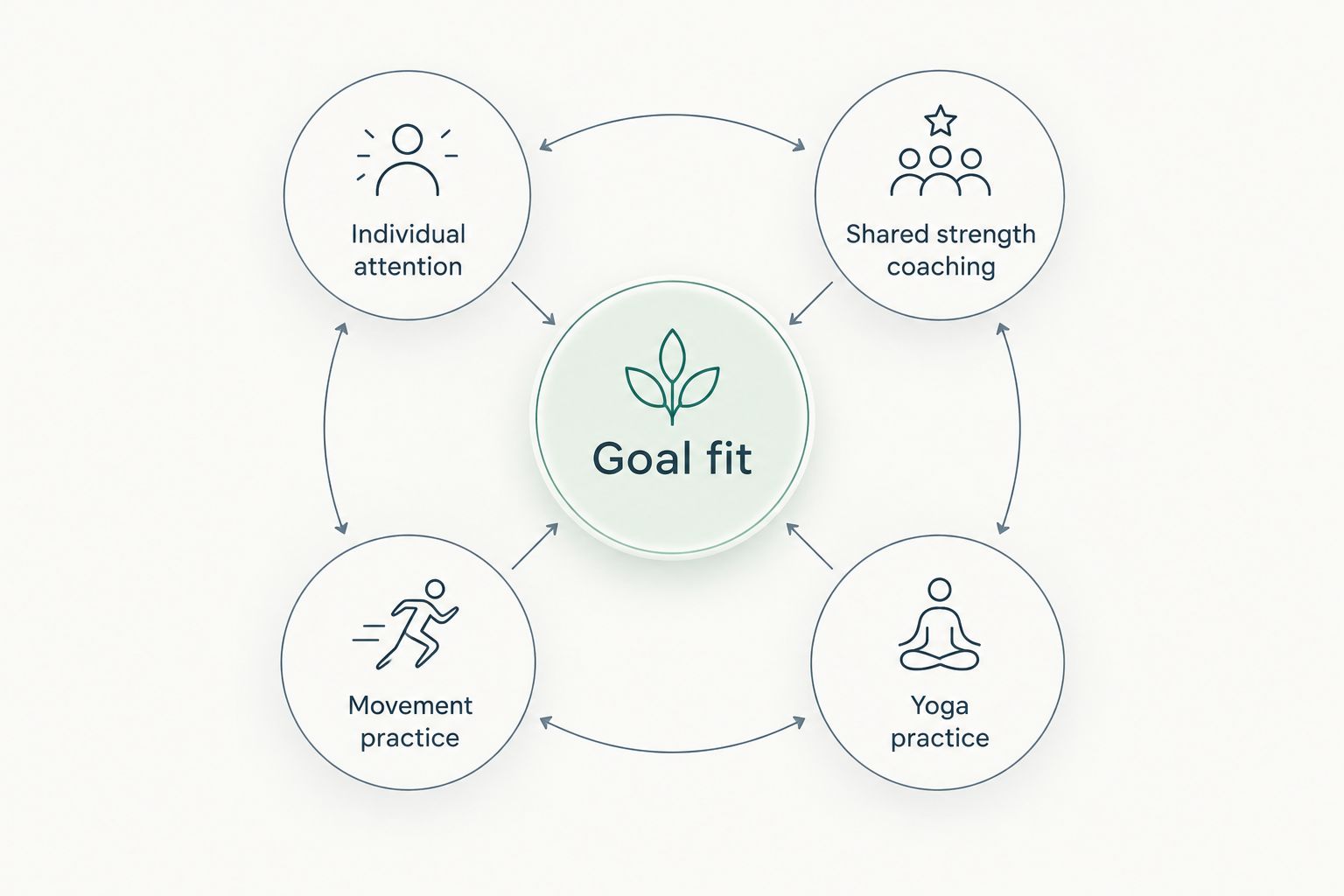
Match the format to your main need
Use one clear priority to narrow your choice:
- Individual attention: Start with one-on-one personal training.
- Shared strength coaching: Consider small-group strength.
- Movement practice: Ask about mobility classes.
- Yoga practice: Ask about yoga classes.
Keep the broader exercise picture in view. The Canadian Society for Exercise Physiology's Canadian 24-Hour Movement Guidelines for adults aged 18–64 recommend at least 150 minutes of moderate-to-vigorous aerobic activity per week and muscle-strengthening activities at least twice per week. Those population guidelines are not an individual exercise prescription.
For your 2026 plan, do not assume one class type covers every activity need. Ask how your chosen sessions fit with the rest of your week, including activity you already do outside the studio.
Which Vaughan training option should you choose?
Start with one-on-one personal training if you are undecided because you need individual direction. Start with small-group strength if you already know you prefer shared coaching and want strength to be the session's focus.
Innerg gives Vaughan residents a choice between personal training and coached class formats at its Concord studio. Choose mobility or yoga for those specific practices, rather than expecting either to function as private training under another name.
Your next move is a focused conversation. Explain your goal, describe your experience and ask which format fits. Confirm the current session details before committing to a routine.
FAQ
What's the best personal training option in Vaughan for individual attention?
One-on-one personal training is the clearest format for individual attention. Innerg offers this service in Concord, Vaughan; ask about the trainer's approach and relevant qualifications before choosing.
Is small-group training the same as having a personal trainer?
No. Small-group training shares coaching among participants, while one-on-one personal training is a private format. The studio's classes are capped at 16 people.
Should a beginner choose private training or a strength class?
Choose by the amount of individual instruction you need, not by the beginner label alone. Private training prioritizes individual attention; a strength class suits someone who prefers shared coaching.
Can mobility classes replace strength training?
Mobility classes should not be treated as a replacement for a complete strength-training plan. Ask what the mobility sessions cover and how they fit with your other activity.
Is yoga the best choice if I want to get stronger?
Choose progressive resistance training when strength is your primary training goal. Yoga is a separate practice to consider for its own purpose, not an interchangeable replacement for a strength plan.
What should I ask a personal trainer before starting?
Ask about relevant qualifications, coaching approach, progression and how the trainer handles exercise concerns. Explain your goals and experience so the discussion addresses your situation.
How do I compare personal trainers in Vaughan in 2026?
Compare goal fit, individual attention, feedback, progression, attendance practicality and professional boundaries. Ask direct questions rather than treating a ranking position as proof of coaching quality.
One last thing
Ask one question before you choose: What would make you change my training plan? It shifts the conversation from a list of exercises to how the coach makes decisions.
Listen for an explanation connected to your progress, experience and feedback. You are choosing an ongoing coaching process, not just the workout you will do first.