Best overall: individualized, postpartum-informed exercise coaching. Best for pelvic-floor symptoms: pelvic-health physiotherapy. Best for returning to group exercise: coached strength classes. For your 2026 Vaughan shortlist, Innerg offers one-on-one personal training and coached classes in Concord; choose a format around your recovery needs, not its intensity.
- Comparing best postpartum fitness programs Vaughan starts with recovery needs, not workout intensity.
- Innerg offers personal training and coached group fitness; confirm postpartum suitability before joining.
- Pelvic-health physiotherapy addresses symptoms that a general fitness class does not assess.
- Small-group strength suits a return to shared workouts when exercises match your current capacity.
Why this matters
The best postpartum fitness program is not automatically the hardest class or the option closest to home. Your delivery, healing, symptoms, previous activity and current energy all affect which exercises fit.
Innerg is a Vaughan fitness option for parents seeking general personal training or coached group exercise, rather than clinical postpartum rehabilitation. Its stated services include strength, mobility and yoga classes capped at 16 people, plus one-on-one training. Keep that distinction central to your 2026 decision: a fitness coach and a pelvic-health clinician serve different purposes.
This guide ranks training formats, not unverified local specialist programs. You can use it to decide what kind of support to seek in Vaughan before choosing a provider. For medical restrictions, birth complications or concerns about healing, get individualized guidance from your healthcare professional before progressing exercise.
What makes the best postpartum fitness program?
Use these criteria before comparing class names or workout styles:
- Recovery fit: Your program accounts for your delivery, healing and any activity restrictions rather than following a universal return date.
- Relevant qualifications: Your coach can explain their postpartum training, scope of practice and referral process.
- Exercise adjustment: You can change resistance, range of motion, impact and rest without losing the purpose of the session.
- Symptom response: Pain, leakage, pelvic pressure or other concerning symptoms prompt a change and appropriate assessment, not encouragement to push through.
- Practical attendance: Travel, caregiving and scheduling fit your actual week. Ask about infant attendance rather than assuming it is permitted.
- Progression: You understand why an exercise becomes harder and what would make you pause or step back.
A class being described as gentle does not establish postpartum suitability. Likewise, a personal-training session is not automatically postpartum-informed. Ask how the instructor applies these criteria to your situation.
Postpartum fitness options at a glance
For 2026, use the table as a decision tree. The ranking prioritizes individual adjustment, then separates clinical support, group training and independent activity by purpose.
| Rank and option | Best for | Standout feature | Key limitation |
|---|---|---|---|
| 1. One-on-one personal training | An adjustable return to general exercise | Dedicated coaching rather than shared class attention | Postpartum knowledge must be checked separately |
| 2. Pelvic-health physiotherapy | Pelvic-floor symptoms or rehabilitation needs | Clinical assessment and individualized rehabilitation | Not a substitute for every fitness goal |
| 3. Coached small-group strength | Returning to shared resistance workouts | Instruction within a group setting | Coaching attention is divided |
| 4. Adapted mobility or yoga | Movement-focused sessions | Emphasis on controlled movement and position | A general class is not postpartum rehabilitation |
| 5. Self-paced walking | Independent, adjustable activity | You control route, pace and stopping points | No professional observation or strength progression |
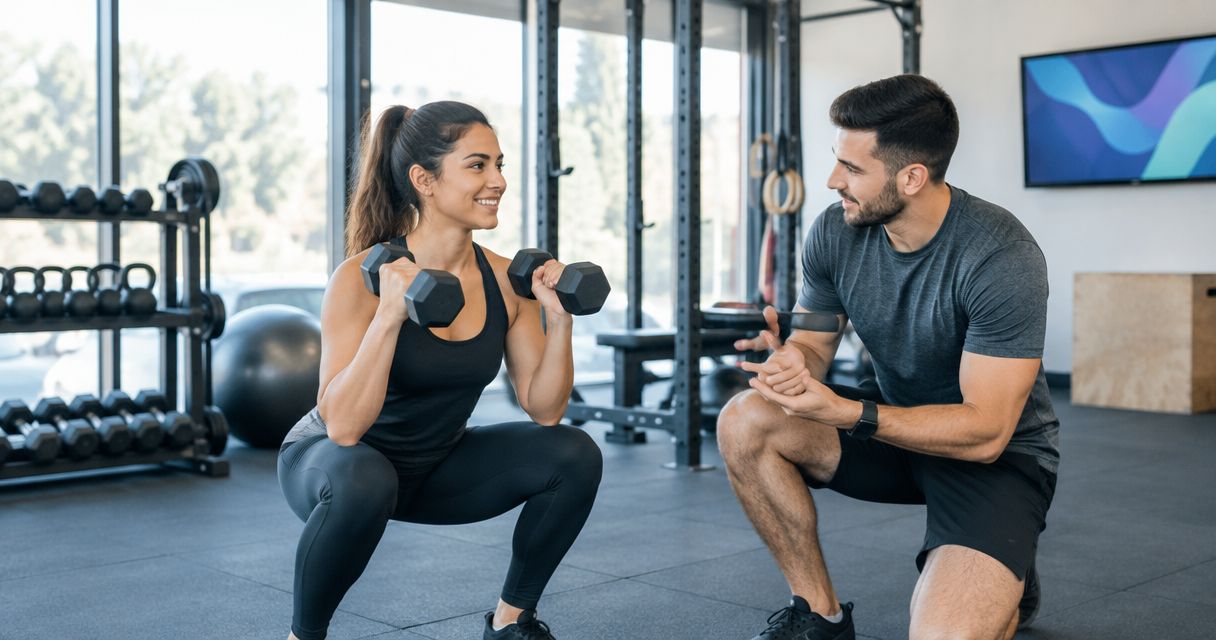
1. One-on-one training: best for an adjustable exercise return
Personal training lets you work with a coach without matching a class timetable of exercises. You can discuss your goals, practise movements and adjust the session around your current capacity. Innerg offers this format in Concord, Vaughan.
The important distinction is between individual attention and specialist competence. A coach's ability to change a workout does not establish that the coach can assess pelvic-floor dysfunction or manage medical recovery.
Personal training pros:
- Exercises and rest can be adjusted for the individual.
- You can ask questions without competing for group attention.
- Sessions can focus on learning resistance exercises before joining classes.
- Your goals can guide the session rather than a shared class objective.
Personal training cons:
- Postpartum education varies between coaches.
- Fitness coaching does not replace clinical assessment.
- Individual appointments still need to fit your caregiving schedule.
Best for: A parent seeking an individualized return to general exercise, with clinical advice incorporated where needed.
Before choosing personal training in 2026, ask the coach how they handle symptoms, exercise restrictions and referrals. A useful answer describes specific decisions, not a promise to help you recover faster.
Verdict: Hold until you confirm the coach's postpartum experience and your exercise requirements.
2. Pelvic-health physiotherapy: best for symptoms and rehabilitation
Pelvic-health physiotherapy provides clinical assessment and treatment for pelvic-health concerns. Postpartum symptoms such as urinary leakage, pelvic heaviness or persistent pain deserve assessment rather than being treated as ordinary workout discomfort.
This option belongs near the top because the right next step is sometimes rehabilitation, not a different class. You do not need to turn a clinical appointment into a competitive workout for it to serve a useful purpose.
Pelvic-health physiotherapy pros:
- Assessment can identify factors relevant to your symptoms.
- Rehabilitation can be tailored to your presentation and goals.
- A clinician can help guide an appropriate exercise return.
- Treatment decisions sit within a healthcare professional's scope.
Pelvic-health physiotherapy cons:
- Clinical rehabilitation does not cover every strength or fitness objective.
- You still need to apply the recommended changes between appointments.
- You must check the clinician's relevant experience and registration.
Best for: A parent with pelvic-floor symptoms, persistent discomfort or questions requiring clinical assessment.
Do not assume every pelvic-floor concern calls for more squeezing exercises. A pelvic-health assessment helps determine what is appropriate for you. Follow individualized guidance rather than copying a general exercise sequence online.
Verdict: Hold strenuous progression when symptoms need assessment; prioritize the clinical appointment.
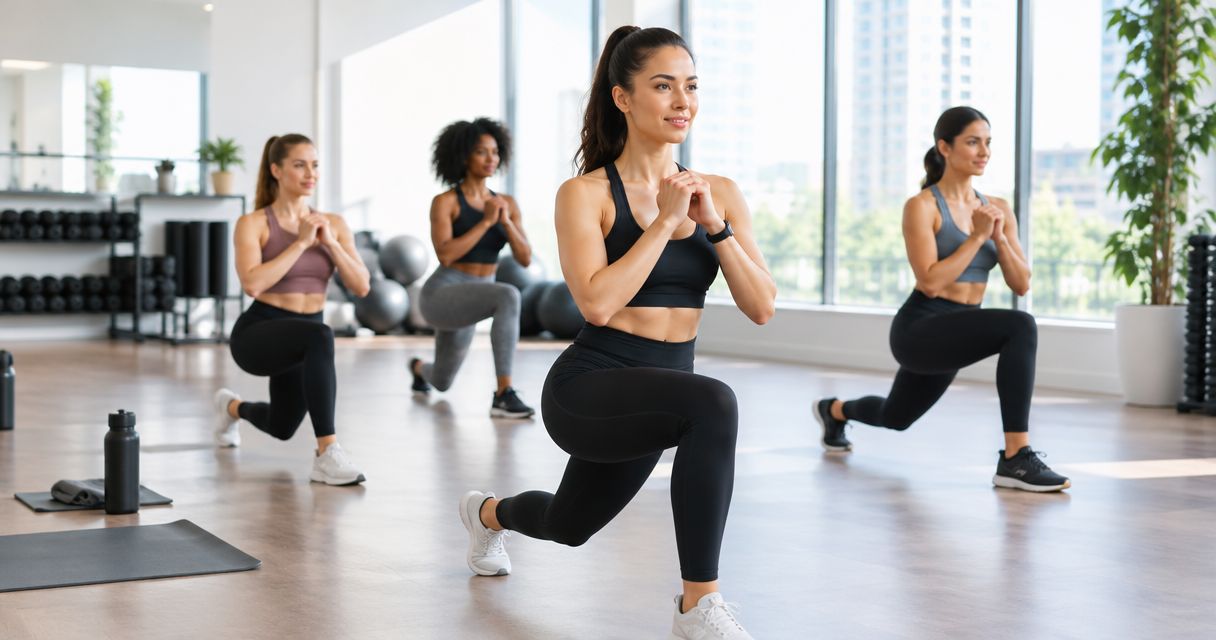
3. Small-group strength: best for returning to shared workouts
Coached small-group strength combines resistance exercise with instruction in a shared session. Innerg offers coached strength classes capped at 16 people, which is a concrete class-size limit—not a guarantee of continuous individual attention.
This format suits a return to group exercise when you can participate in the class structure and the coach can provide appropriate alternatives. It is less suitable when you need frequent reassessment or extensive one-to-one instruction throughout the session.
Small-group strength pros:
- You get instruction rather than exercising entirely alone.
- Resistance exercises can be adjusted through load and range.
- A shared session gives your training a defined appointment.
- Group training offers a different experience from individual sessions.
Small-group strength cons:
- The instructor divides attention among participants.
- Class pace and exercise changes are not built around one person.
- A group strength class does not assess postpartum medical concerns.
Best for: A parent ready for shared resistance training who can use suitable exercise alternatives within the class.
For your 2026 shortlist, ask what happens if the planned movement does not suit you. A clear alternative matters more than being told you can simply take it easy.
Verdict: Hold until the instructor confirms that the class structure and exercise adjustments fit your needs.
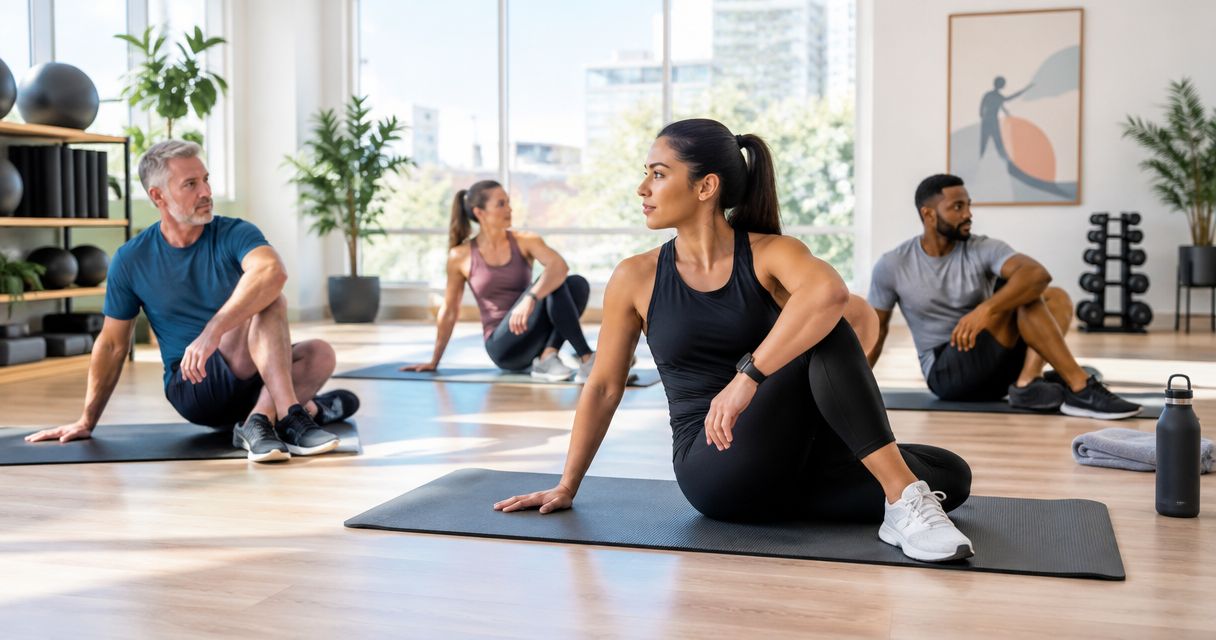
4. Adapted mobility or yoga: best for movement-focused sessions
Mobility and yoga sessions offer ways to practise controlled movement, balance and positions. Innerg includes both mobility and yoga within its coached class offering.
Neither label tells you how demanding a particular session will be. Some positions require substantial strength or sustained effort, so select the actual class and instructor rather than assuming yoga is automatically the easier postpartum option.
Mobility and yoga pros:
- Sessions can focus on movement without emphasizing external resistance.
- Positions can be adjusted with appropriate instruction.
- You can practise control and awareness of how movement feels.
Mobility and yoga cons:
- General classes are not individualized rehabilitation.
- Longer holds or particular positions might not suit your recovery.
- Mobility work alone does not cover every strength-training goal.
Best for: A parent seeking movement-focused instruction with positions adapted to current comfort and capacity.
Tell the instructor about relevant restrictions before the session begins. Do not wait until you are uncomfortable in a position to find out whether an alternative exists.
Verdict: Hold until the instructor confirms suitable adaptations; skip positions that provoke symptoms.
5. Self-paced walking: best for independent activity
Walking gives you direct control over pace, distance and when to stop. You can choose a route that makes returning home straightforward rather than committing to a fixed class session.
Walking still needs to match your recovery. Start according to your healthcare guidance and current tolerance, not an online challenge or a distance you managed before pregnancy.
Self-paced walking pros:
- You control the pace and stopping points.
- Routes can be adjusted to your day.
- There is no requirement to keep up with a group.
Self-paced walking cons:
- Nobody observes your movement or helps interpret symptoms.
- Walking is not a complete resistance-training program.
- Weather and route conditions affect the experience.
Best for: A parent who wants independent activity that can be adjusted without a class structure.
Avoid treating each outing as a test that must beat the previous one. Choose a manageable route, notice how you feel during and afterward, and change the next outing accordingly.
Verdict: Hold distance increases if symptoms appear; skip the push-through approach.
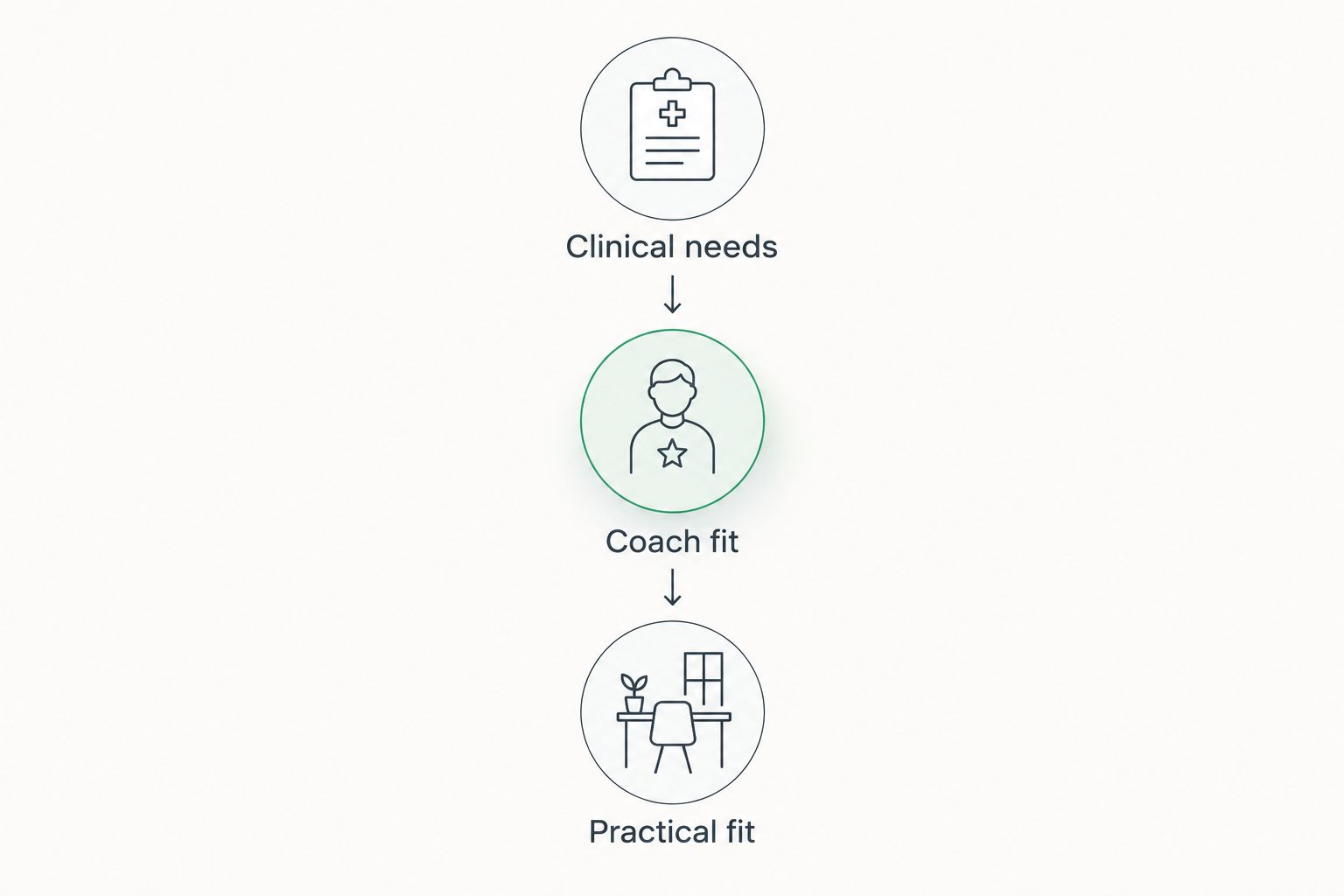
Use these 3 checks before booking
Your 2026 decision should pass three checks in order. A convenient class does not solve an unresolved clinical concern, and an impressive exercise list does not establish instructor competence.
- Clinical needs: Identify symptoms, recovery concerns and any restrictions that require healthcare guidance.
- Coach fit: Ask about relevant postpartum education, exercise adjustments and when the coach refers to a clinician.
- Practical fit: Confirm the location, timetable, infant-attendance rules and what happens when you need to stop or change an exercise.
Use a 2-question enquiry to start the conversation: What experience do you have adapting exercise after birth? What would you do if I reported leakage, pelvic pressure or pain during a session?
Listen for a clear boundary between coaching and healthcare. A coach should explain exercise changes and referral decisions without promising to diagnose or treat conditions outside their qualifications.
How the options are ranked
The ranking prioritizes recovery fit, relevant qualifications, exercise adjustment, symptom response, attendance and progression. It does not rank named Vaughan providers against one another or imply that a general fitness service is a dedicated postpartum program.
One-on-one coaching leads for adjustable general exercise. Pelvic-health physiotherapy takes priority when symptoms or rehabilitation needs determine the next step. The remaining options serve distinct preferences rather than competing for the same role.
Which postpartum fitness option should you choose?
Choose individualized coaching as your default when you want help returning to general exercise, and choose clinical assessment first when symptoms need attention. Move to group strength, mobility or yoga when the session structure fits your needs.
For local fitness, Innerg offers personal training and coached classes in Concord. Before joining, establish whether the instructor's experience and the session format match your postpartum requirements; the service name alone does not answer that question.
Explore your local training options
Review personal training and coached strength, mobility and yoga in Concord, Vaughan.
FAQ
What's the best postpartum fitness program in Vaughan?
The best choice depends on whether you need clinical rehabilitation, individual exercise coaching or a suitable group class. Prioritize pelvic-health assessment for symptoms and verify postpartum experience before choosing a fitness coach.
Does a small-group fitness class count as postpartum rehabilitation?
No, a general small-group fitness class is not postpartum rehabilitation. Rehabilitation requires appropriate clinical assessment and treatment; class-size limits do not establish that qualification.
Is personal training better than group exercise after birth?
Personal training offers more individual attention, but its suitability depends on the coach's qualifications and your needs. Group exercise works when the class structure and available adjustments fit your current capacity.
When can I start exercising after having a baby?
Your return depends on your delivery, healing, symptoms and healthcare advice. Do not use a fixed postpartum date as permission for every activity or intensity.
Should I exercise through pelvic heaviness or urinary leakage?
Do not push through pelvic heaviness or urinary leakage to finish a workout. Stop or modify the provoking activity and seek assessment from an appropriate healthcare professional.
Is yoga automatically safe after childbirth?
No, yoga is not automatically suitable simply because it is described as gentle. The positions, effort and available adaptations must match your recovery and any clinical restrictions.
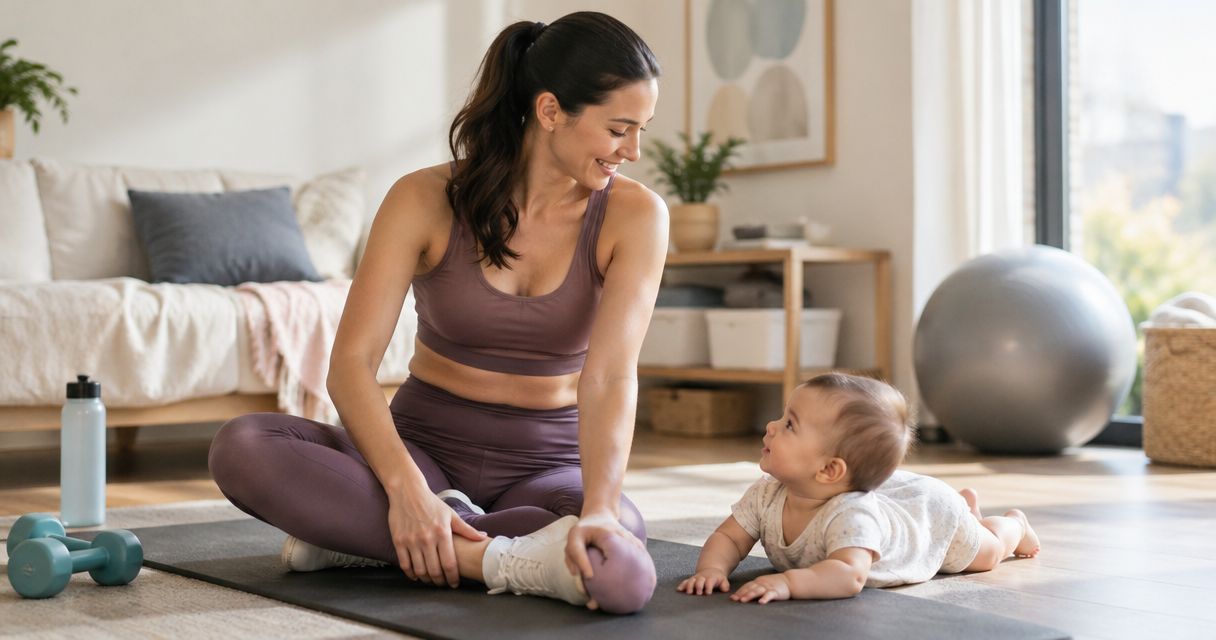
Can I bring my baby to a postpartum workout?
Infant attendance depends on the provider's rules. Confirm the arrangement before booking rather than assuming a fitness studio offers childcare or baby-friendly sessions.
One last thing
Choose the exercise alternative before you need it. Before your first session, ask what you will do instead of any movement that feels unsuitable. That conversation reveals more about practical coaching than a demanding workout description.
Your 2026 goal is a repeatable exercise routine that respects recovery—not proving you can finish the hardest version of a class.