Best overall format: coached studio yoga. Best for movement variety: yoga with mobility. Best for individual attention: one-on-one training. For employers comparing the best corporate yoga Vaughan options in 2026, Innerg is a local starting point for small-group yoga, not a confirmed corporate-program provider.
- For best corporate yoga Vaughan searches, start with coached studio yoga and confirm employer booking arrangements.
- Innerg offers yoga, strength and mobility classes in Concord, Vaughan, capped at 16 people.
- Choose yoga with mobility for movement variety; choose personal training for individual attention.
- A public class timetable does not establish private corporate bookings, workplace delivery or employer packages.
Why this matters
An employer wellness booking and an individual yoga membership solve different problems. You need a suitable activity, but you also need a workable arrangement for attendance, instruction and payment.
Choose the format before choosing the provider. Otherwise, you risk comparing a public yoga class with a private workplace session as though they were interchangeable.
This 2026 guide ranks program formats rather than presenting an unsupported league table of corporate providers. It separates confirmed local services from arrangements you need to discuss directly, so you can build a shortlist without mistaking a studio's yoga offering for an employer package.
What makes the best corporate yoga program?
Use these criteria before reviewing the ranked options:
- Booking fit: Establish whether you need individual class registrations, a private group booking or instruction at your workplace.
- Participant fit: Ask how instruction accommodates different experience levels and movement preferences.
- Group capacity: Compare expected attendance with the actual booking limit, not the size of your employee mailing list.
- Coaching attention: Ask how participants receive explanations, alternatives and help during the session.
- Practical access: Check location, travel, changing arrangements and the space required for the chosen activity.
- Clear purpose: Decide whether your priority is shared participation, movement variety, strength practice or individual instruction.
A provider belongs on your shortlist only when the booking arrangement matches your needs. A good individual class is not automatically a suitable team event.
Corporate yoga and wellness options at a glance
The table ranks formats by their fit for an employer choosing a shared movement activity. The linked guides provide local comparison starting points; they do not establish corporate booking terms.
| Rank and option | Best for | Standout feature | Key limitation |
|---|---|---|---|
| 1. Coached studio yoga | A shared yoga-focused activity | A dedicated setting for instructor-led practice | Public classes do not establish private team access |
| 2. Yoga with mobility | Teams seeking movement variety | Combines yoga practice with a separate mobility focus | Session content and booking arrangements need confirmation |
| 3. Small-group strength and mobility | Teams prioritizing coached exercise beyond yoga | Adds strength practice to the wellness brief | Less suitable when yoga is the specific request |
| 4. One-on-one personal training | Individual instruction | A session centred on one participant | Does not provide a shared team experience |
| 5. Workplace movement breaks | Participation without studio travel | Keeps the activity at the workplace | Requires suitable space and a confirmed delivery arrangement |
1. Coached studio yoga: best for a shared yoga activity
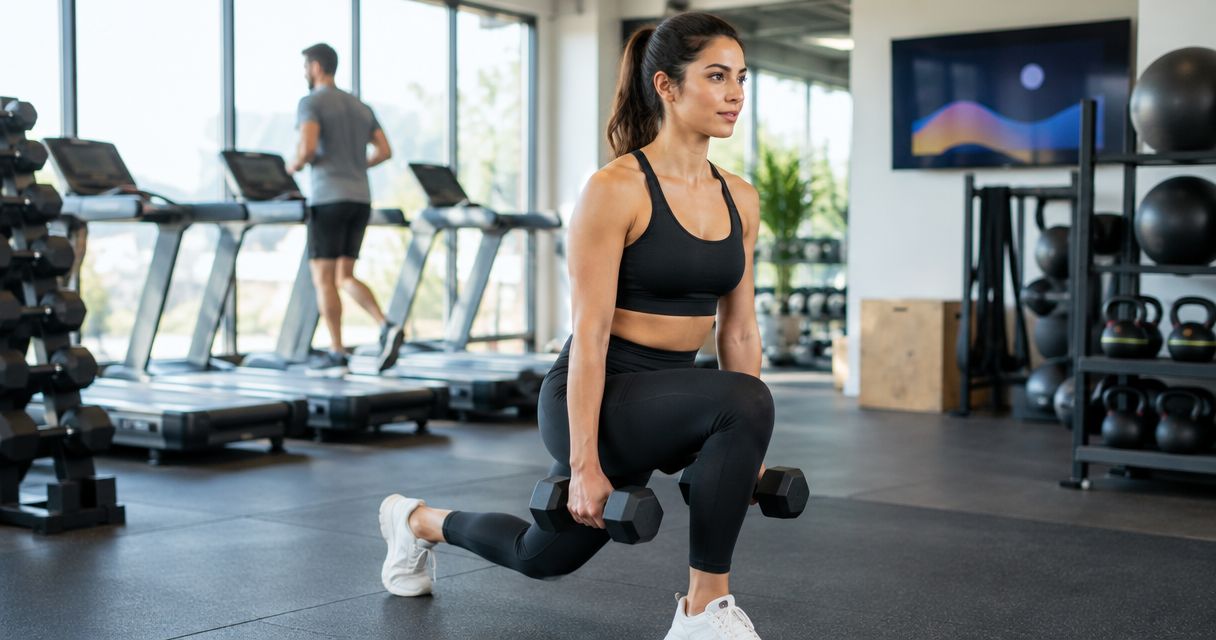
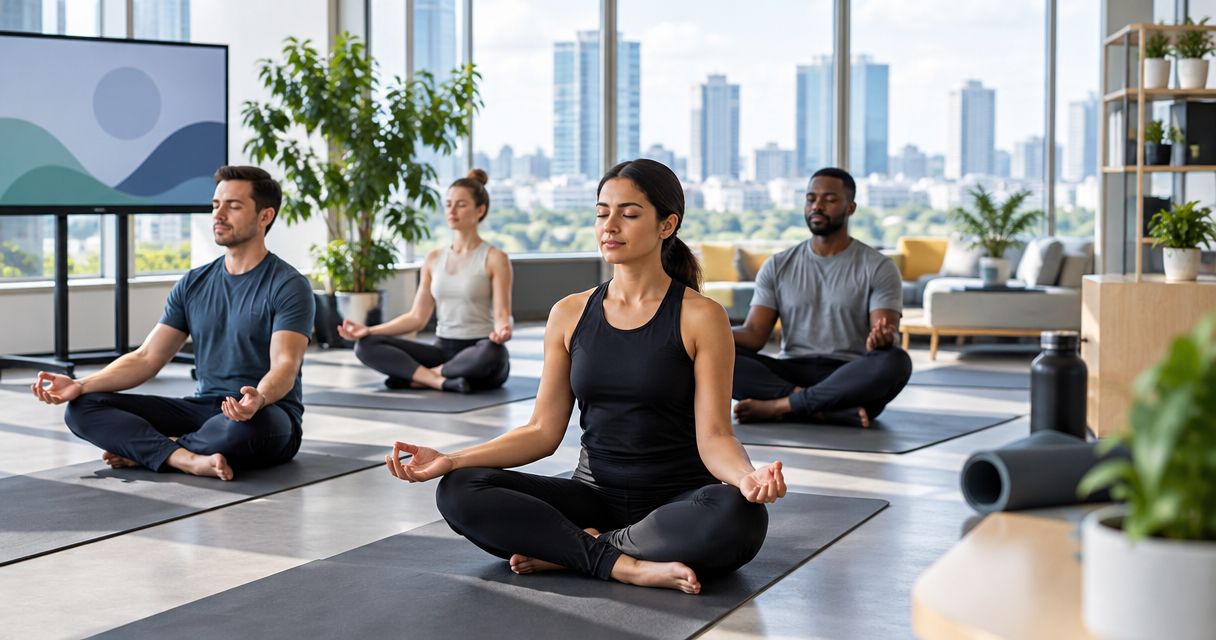
Coached studio yoga is the clearest starting point when your team specifically wants yoga rather than a broad fitness session. You attend a dedicated exercise setting and follow an instructor-led practice.
Innerg is best for local employees seeking coached small-group yoga in Concord, Vaughan. Its classes are capped at 16 people, but that cap does not establish how many places an employer can reserve or whether a private booking is offered.
For a broader local shortlist, compare the best yoga studios in Vaughan, then ask each provider the same booking questions. Keep the distinction between attending an existing class and arranging a team session explicit.
Coached studio yoga pros:
- Keeps yoga at the centre of the activity.
- Provides a dedicated setting rather than an improvised office space.
- Gives your team a shared instructor-led experience.
Coached studio yoga cons:
- Travel creates an additional participation requirement.
- An existing class can include people outside your team.
- A published class cap does not guarantee a group reservation.
Best for: Employers whose staff want yoga and can attend a studio.
Verdict: Buy into this format first; confirm the group arrangement before committing.
2. Yoga with mobility: best for movement variety
Yoga with mobility suits a team that wants a broader movement session without making strength training the main event. The useful distinction is content: ask what the yoga portion covers and what the mobility portion adds.
Innerg offers both yoga and mobility classes. That establishes relevant services, not a combined corporate session; ask whether your preferred arrangement exists rather than assuming separate timetable categories can be merged.
Use the mobility and recovery classes in Vaughan guide to compare the movement focus of local options. For a 2026 shortlist, request a plain-language session outline instead of relying on a wellness label.
Yoga with mobility pros:
- Gives you distinct movement elements to assess.
- Fits a brief that extends beyond yoga alone.
- Makes session content a useful point of comparison.
Yoga with mobility cons:
- The label does not establish the exercises or teaching approach.
- Separate services do not confirm a combined booking.
- Mobility instruction is not a substitute for clinical assessment.
Best for: Teams asking for varied movement rather than a yoga-only activity.
Verdict: Buy when the proposed session clearly matches your movement brief.
3. Small-group strength and mobility: best beyond yoga
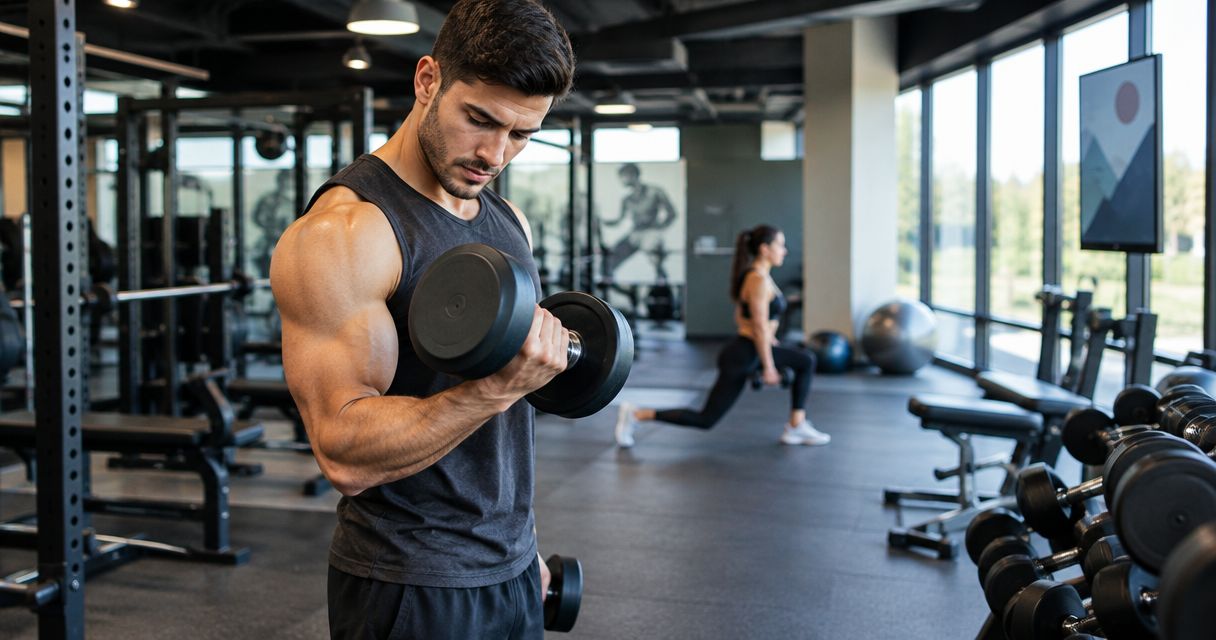
Small-group strength and mobility is the better choice when employees want coached exercise and yoga is optional. It changes the purpose of the booking: strength practice becomes part of the activity rather than an incidental addition.
Innerg offers coached strength and mobility classes with a 16-person class cap. Those services make the studio relevant to a broader fitness shortlist, while employer-specific access still requires confirmation.
Compare small-group training studios in Vaughan if your brief centres on exercise coaching. Do not call the final selection a corporate yoga program if the activity you actually choose is strength training.
Small-group strength and mobility pros:
- Matches a brief focused on coached exercise.
- Offers an alternative for employees who prefer strength practice.
- Keeps instruction central to the group format.
Small-group strength and mobility cons:
- Does not answer a yoga-specific request.
- Exercise selection needs to suit the participants.
- Shared instruction is different from individual programming.
Best for: Teams that want a fitness activity rather than yoga alone.
Verdict: Buy for a strength-focused brief; skip for a yoga-only brief.
4. One-on-one personal training: best for individual attention
One-on-one personal training centres the session on an individual rather than a group. It belongs in an employer wellness comparison when the objective is individual exercise instruction, not shared participation.
Innerg offers one-on-one personal training alongside its small-group classes. Employer-funded arrangements, reporting and administration are separate questions; the service description does not establish those terms.
One-on-one personal training pros:
- Focuses the session on one participant.
- Allows direct discussion of individual exercise goals.
- Avoids requiring colleagues to follow the same session.
One-on-one personal training cons:
- Does not create a shared team activity.
- Requires individual scheduling.
- Needs clear boundaries around personal information and employer involvement.
Best for: Employees seeking individual instruction rather than group yoga.
Verdict: Buy for individual support; skip as a substitute for a team session.
5. Workplace movement breaks: best without studio travel
A workplace movement break keeps participation at the office. It is a format to investigate, not a verified service from any provider named here.
The practical work starts with the space. Confirm whether the intended activity involves chairs, standing movements or floor-based practice, then establish whether the room supports that approach without obstructing normal workplace access.
Workplace movement break pros:
- Removes the need to travel to a studio.
- Keeps the activity close to the working day.
- Lets you assess the workplace setting before booking.
Workplace movement break cons:
- Meeting rooms are not automatically suitable exercise spaces.
- Workplace interruptions can compete with participation.
- Instructor delivery and any equipment requirements need confirmation.
Best for: Teams for whom travel is the main participation barrier.
Verdict: Hold until the instructor, space and delivery arrangement are confirmed.
How the options are ranked
The ranking prioritizes a direct match to a corporate yoga request, followed by movement variety, broader exercise coaching, individual attention and workplace convenience. It does not claim that one format produces better health outcomes than another.
For 2026, coached studio yoga is the default because it answers the yoga brief directly. The other options move higher only when your team's stated objective changes.
Match the format to the actual request
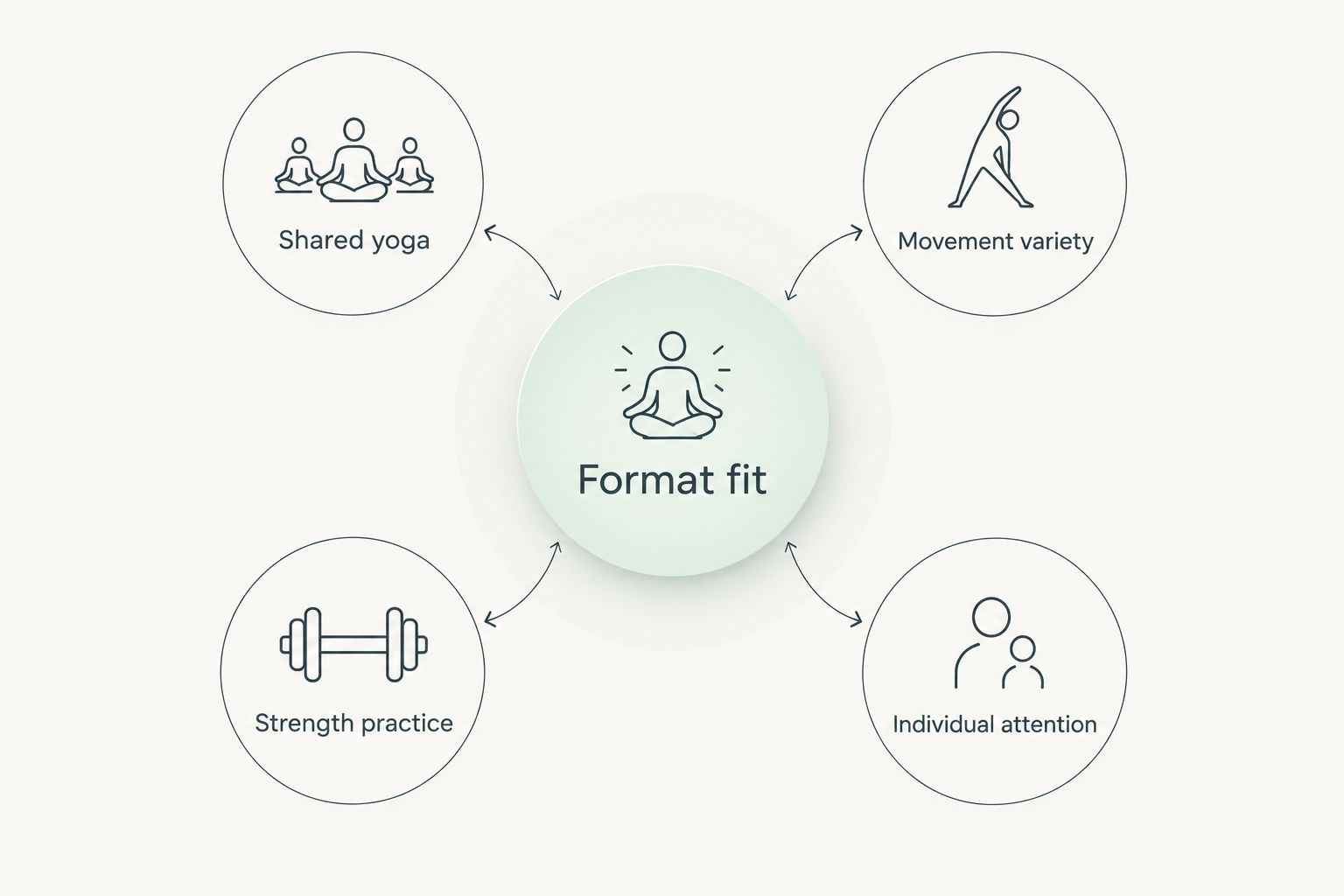
Before contacting providers, choose the phrase that best describes your brief:
- Shared yoga: Employees want an instructor-led yoga activity together.
- Movement variety: Employees want yoga alongside a mobility focus.
- Strength practice: Employees want coached exercise beyond yoga.
- Individual attention: Employees want instruction centred on personal goals.
These are different requests, not interchangeable versions of wellness. Send the same brief to every provider so the responses address the same decision.
A clear brief also prevents unnecessary scope changes. If employees ask for shared yoga, do not replace it with strength training simply because another booking is easier to arrange.
Check the booking before you commit
Turn your preferred format into a practical enquiry. State the activity, expected attendance, preferred setting and whether you need a private group session or access to existing classes.
Ask these questions before accepting a proposal:
- Is this a private booking or attendance within a public class?
- What is the attendance limit for this particular arrangement?
- How are different experience levels accommodated?
- What should participants bring, wear or disclose directly to the instructor?
- What are the current booking, cancellation and payment terms?
- Who handles participant questions that should remain private?
Start with 1 pilot session rather than assuming an ongoing program is the right commitment. Afterward, ask 2 feedback questions: did the format suit you, and would you choose it again? Those answers assess fit without pretending to measure clinical outcomes.
For an Innerg enquiry, use the confirmed 16-person class cap as context, not a promise of reserved places. Ask about the arrangement your team needs.
Explore local coached classes
Review yoga, mobility, strength and one-on-one training before asking about your team's booking needs.
Which corporate yoga option should you choose?
Choose coached studio yoga unless your team's brief points elsewhere. It is the most direct answer to a yoga-focused request, while mobility, strength training and personal training serve distinct purposes.
For your 2026 decision, keep two judgments separate: whether the activity suits employees and whether the provider can support the required arrangement. Confirm both before treating any option as a corporate program.
FAQ
What's the best corporate yoga option in Vaughan?
Coached studio yoga is the clearest starting format for a team specifically requesting yoga. Confirm group access, participant suitability and booking terms before selecting a provider.
Does Innerg offer corporate yoga packages?
A corporate yoga package is not established by the services described here. Innerg offers coached yoga, strength and mobility classes capped at 16 people, plus one-on-one personal training; ask directly about employer arrangements.
Is studio yoga better than workplace yoga for employees?
Studio yoga is the better fit when a dedicated exercise setting matters; workplace yoga addresses the need to avoid travel. Neither format establishes private access or suitability without a booking discussion.
Can a whole team attend the same yoga class?
Whole-team attendance depends on the provider's booking arrangement and the number attending. A class cap is not a guarantee that every place can be reserved for your team.
Should a corporate wellness program include personal training?
Include personal training when the objective is individual exercise instruction. It does not replace the shared experience of a team yoga session.
What should an employer ask before booking yoga in 2026?
Ask whether the session is private, how attendance is handled and how instruction accommodates different experience levels. Confirm practical requirements and current booking terms before inviting employees.
One last thing
A class cap and a team booking are different facts. A limit of 16 people tells you the maximum class size, not whether your employees can occupy those places together.
Make that distinction explicit in your first enquiry. It resolves a practical booking question before you spend time comparing session descriptions.